

Quick answer
A wallet address is a public identifier generated from your keys. Share it freely to receive crypto: it cannot spend your funds, and it is not your seed phrase. My Wallet gives you a separate address per network from one seed. Always check two things before sending — the address and its network.
How a wallet address works
Your wallet turns a private key into a public key and then into an address. The process only runs one way, so an address does not reveal your private key. Anyone can look up an address on a public blockchain explorer and see its balance and history, but only the holder of the keys can move the funds.
Never confuse the three:
- Address: public, safe to share, used to receive.
- Seed phrase: the 12 or 24 words that restore your wallet. Never share it. See What Is a Seed Phrase?
- Private key: the secret that signs transactions. Never share it. See What Is a Private Key?
What addresses look like on each network
Every network has its own format, and addresses are not interchangeable between networks.
| Network | What the address looks like |
|---|---|
| Bitcoin | Starts with 1, 3, bc1q, or bc1p |
| Ethereum and other EVM networks (Base, BNB Chain, Arbitrum, Polygon, Avalanche, Optimism, and more) | 0x followed by 40 characters |
| Solana | A long string of letters and numbers, with no 0x |
| TRON | Starts with T, 34 characters |
| TON | Starts with EQ or UQ, 48 characters |
| Zcash (transparent) | Starts with t |
| Dogecoin | Starts with D |
| Litecoin | Starts with L, M, or ltc1 |
| Bitcoin Cash | Starts with q, often shown as bitcoincash:q… |
The prefix narrows down the network but does not prove it. Every EVM network shares the same 0x format, so one address works on Ethereum, Base, Arbitrum, and the rest. Your balances on each are separate.
Why the wrong network can cost you funds
A transfer is not reviewed by a person, and it cannot be reversed. If you send USDT on the wrong network, one of three things happens:
- The wallet rejects it. Sending to a TRON address from an Ethereum send screen usually fails, because the formats differ. This is the safe outcome.
- It arrives on the wrong network. With
0xaddresses, funds can land on a network the recipient is not watching. Sometimes the owner can still reach them by switching networks in their wallet, but an exchange deposit address may not be recoverable. - It goes to the wrong person. A mistyped or substituted address sends funds to someone else for good.
Match the network every time, and send a small test first with a new recipient. For a worked example, see How to Send USDT on TRON.
Memos and tags
Some exchanges and services use one deposit address for many users. They add a memo or tag, an extra identifier that tells them which account to credit. If a service shows a memo or tag, include it. If you forget it, the transfer can arrive on-chain but not be credited automatically. Recovery may need support and extra checks. Read What is a memo/tag, and when is it required?
Address poisoning and other address scams
In address poisoning, a scammer sends you a tiny or zero-value transaction from an address that matches the first and last characters of one you use. It then sits in your history, and the scammer hopes you copy it by mistake next time.
- Never copy a destination address from your transaction history.
- Use Saved Addresses, or ask the recipient for the address again.
- Check every character, including the middle, not just the start and end.
- Treat unexpected tiny deposits as a warning, not a gift.
- Be careful with clipboard-swapping malware and with addresses sent in chat from unknown people.
My Wallet marks detected look-alike transfers with a Scam label, but it is still your job to check the whole address. More in How to Avoid Crypto Phishing Scams and the Help Center's Address Poisoning guide.
Tips for sharing and using addresses
- Copy your address from the Receive screen of the app, and pick the right network.
- Compare the whole address on both sides, or scan the QR code and still check it.
- Save frequent recipients with the network noted.
- Send a small test before a large transfer.
Get your own addresses
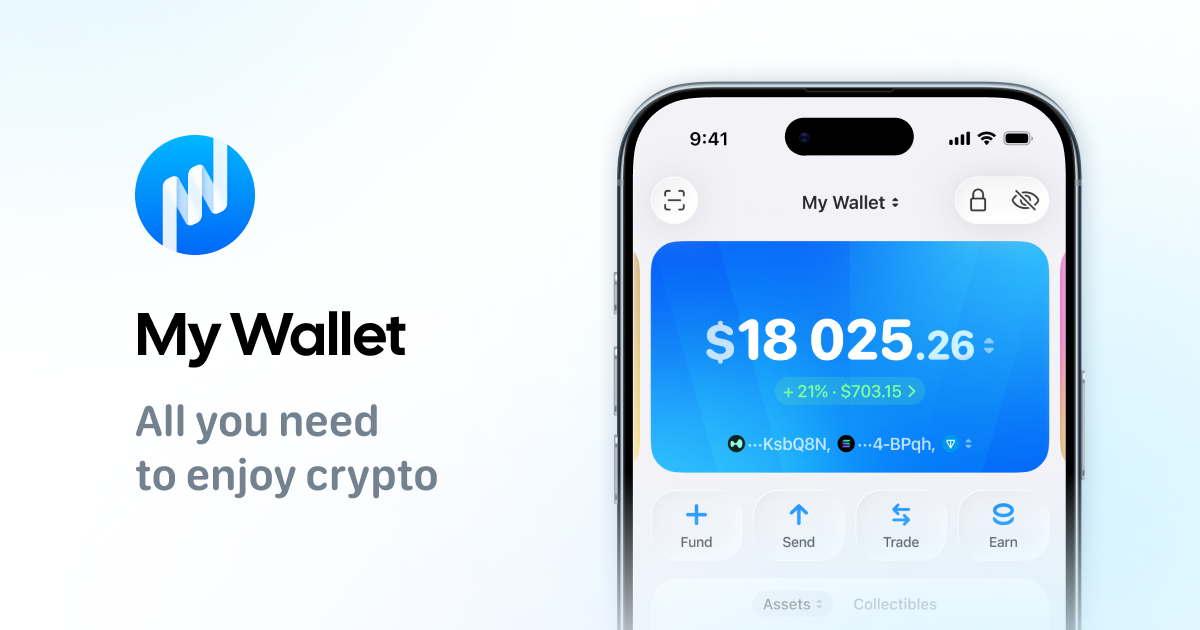
Download My Wallet to get an address on each network from one self-custody seed phrase. You hold the keys.
FAQ
Is a wallet address the same as a private key?
No. An address is public and used to receive. A private key is secret and used to spend. Never share your private key or seed phrase.
Can someone steal my crypto if they know my address?
No. An address only lets people send to you and see your public activity. Funds move only with your keys.
Can I use the same address on different networks?
On EVM networks such as Ethereum, Base, and Arbitrum, the address looks the same, but balances are separate. Other networks, such as Bitcoin, Solana, and TRON, use different formats.
What happens if I send to the wrong address?
Blockchain transfers can't be reversed. If the address does not exist or belongs to someone else, the funds are very hard or impossible to recover. Always test first.