
A crypto wallet is software or hardware that lets you control blockchain assets through private keys. It does not store coins like a bank account—your assets live on-chain, and the wallet gives you the keys to access them.
Quick answer
A crypto wallet manages your private keys, shows your public addresses, and lets you sign transactions. Whoever controls the private key controls the funds. For everyday use, most people start with a non-custodial mobile or browser wallet.
How a crypto wallet works
- You create or import a wallet.
- The wallet generates a seed phrase (12 or 24 words) and derives private keys.
- You share your public address to receive crypto.
- When you send, the wallet signs locally with your private key.
- The network validates the transaction and updates the ledger.
Nothing leaves your device unless you broadcast a signed transaction.
Custodial vs non-custodial wallets
- Custodial: Keys held by an exchange or platform. Best for quick onboarding and trading on one app.
- Non-custodial: You hold the keys. Best for long-term holding, self-custody, and multichain use.
- Hardware: Keys stay on a physical device. Best for large balances and cold storage.
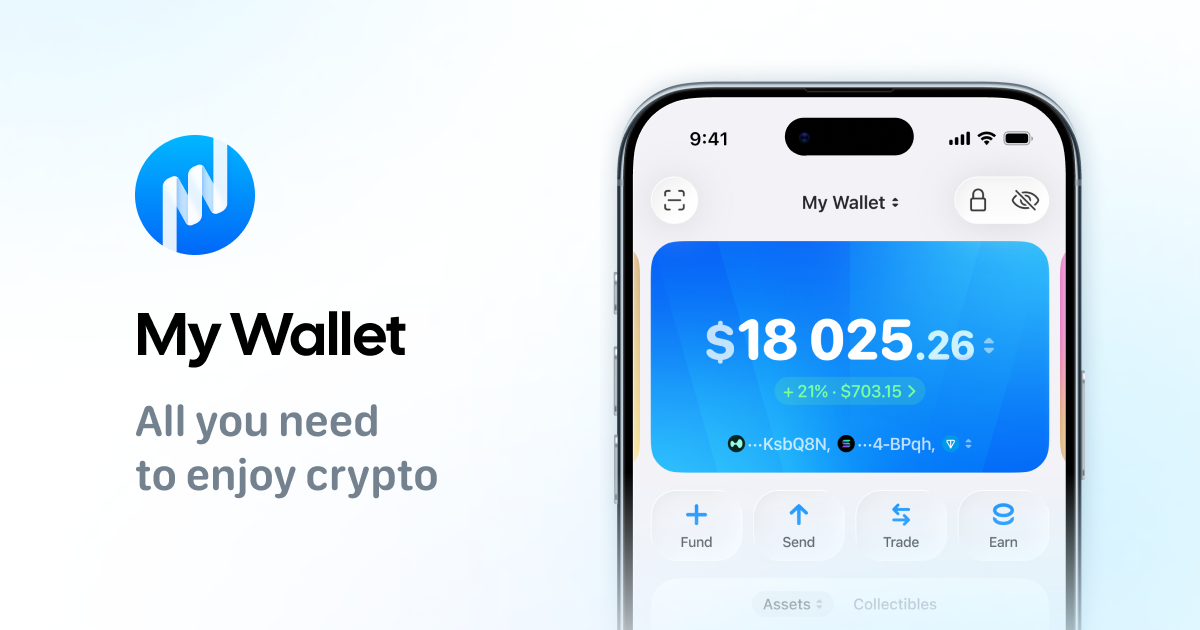
Most My Wallet users choose non-custodial control: you hold the seed phrase, and My Wallet never has access to it. Official support (@mysupport) will never ask for your seed phrase.
What to look for in a wallet
- Clear seed phrase backup during setup
- Support for the networks you use: My Wallet covers multiple networks, including Bitcoin, Ethereum, Solana, Hyperliquid, TON, TRON, Arc, BNB, Base, Robinhood, Monad, Arbitrum, Polygon, Avalanche, Dogecoin, Litecoin, and Bitcoin Cash (full list)
- Transparent network fees before you confirm
- Send, receive, swap, and buy crypto in one app
- Mobile, desktop, browser extension, and Telegram Mini App
- Features such as sub-wallets, gasless transfers on TON and Solana (when available), and Explore for dapps
Why multichain wallets matter
Many users hold assets on more than one network—Bitcoin for long-term holding, Ethereum for dapps, Solana for fast DeFi, TON for Telegram apps, TRON for USDT, and more. A multichain wallet like My Wallet keeps one seed phrase and one interface instead of juggling separate apps.
Start with a secure wallet
Download My Wallet to explore crypto with self-custody—you hold the keys.
FAQ
Is a crypto wallet the same as an exchange account?
No. Exchange accounts are usually custodial—the platform holds your keys. A non-custodial wallet gives you direct control of your seed phrase and funds.
Does a wallet store my crypto inside the app?
No. Assets live on the blockchain. Your wallet stores keys that prove ownership and authorize transfers.
Can I hold USDT in a crypto wallet?
Yes. You can hold USDT, USDC, and other stablecoins on supported networks—including Ethereum and other EVM chains, Solana, TON, TRON, and more. Always confirm the network matches what the sender uses.
What happens if I lose my phone?
If you saved your seed phrase securely, you can restore the wallet on a new device. Without the seed phrase, funds are not recoverable.
Is a crypto wallet free?
Wallet apps are typically free. You pay network fees when sending on-chain. On swaps, you also pay the My Wallet swap aggregator service fee of 0.875%. On TON and Solana, My Wallet may offer gasless transfers for selected tokens so the fee can come from the token you send.
Helpful guides
- How to create a new crypto wallet in My Wallet
- What is a seed phrase and how to store it
- What cryptocurrencies are supported in My Wallet